
Developing Internal Evaluators
Using Evaluation to Support Development and Performance
Challenges in Developing Internal Evaluators
Evaluation challenges are common across organizations, and recent shifts in work style have made them more visible. Remote work has made it harder to observe performance directly, while engagement surveys often surface concerns about fairness and feedback. These issues are not new, but they become harder to address when the evaluator role is understood too narrowly. When managers see evaluation as setting goals and assigning ratings, rather than as a way to support development and performance management, the process can lose its purpose.
Key
Issues
- Engagement surveys show low confidence in evaluation results
- Ratings are clustered, making performance differences unclear
- Evaluators receive training, but goal-setting and feedback remain limited
- Goal-setting and evaluation become routine tasks
What Makes an Effective Internal Evaluator
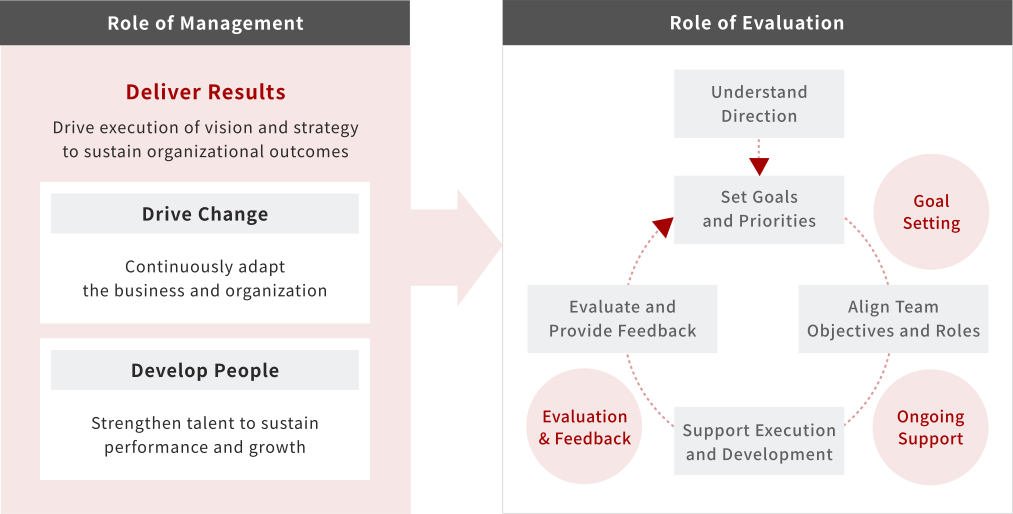
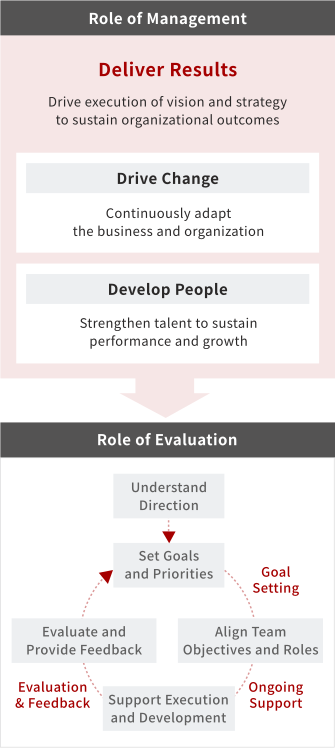
The evaluator role should not be seen as a separate task limited to goal-setting and ratings, but as part of a manager’s broader role in leading people and organizations. Evaluation helps managers support team performance and employee growth by communicating expectations, reviewing actions, providing feedback, and encouraging behavior change. When these practices are connected to performance decisions, the evaluation system becomes a mechanism for supporting growth and improving organizational results.
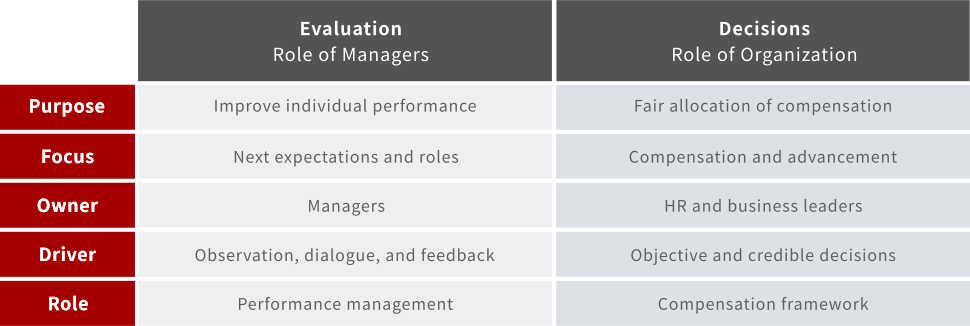
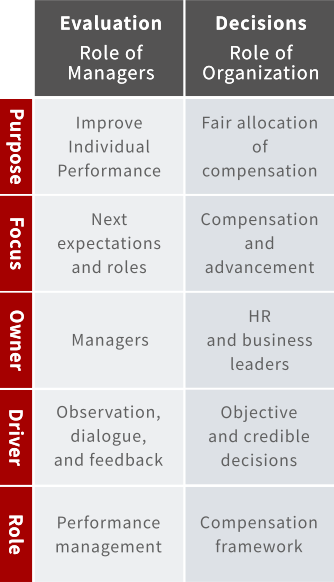
Another common issue is the confusion between evaluation and appraisal. Evaluation supports employee growth, performance, and organizational results, while appraisal is tied to fair compensation and performance decisions. When these are treated as the same, goal-setting and feedback can become routine tasks for determining pay rather than opportunities to communicate expectations and support behavior change. Without a clear view of specific behaviors, feedback becomes less effective and employees may feel the evaluation depends more on the evaluator than on the process.
Three Components of Developing Internal Evaluators
Point Evaluator Role
Evaluators need to understand that evaluation is not the purpose of management, but a tool for supporting results through people and organizations.
- Use goal setting to communicate expectations
- Use evaluation to review actions and progress
- Use feedback to support employee growth
Point Evaluation Practice
Evaluators need to understand the basics of goal setting, evaluation, feedback, and interviews.
- Set goals that connect to roles and responsibilities
- Evaluate based on specific actions and results
- Conduct feedback meetings that lead to improvement
Point Employee Relationship
Confidence in evaluation is shaped by the relationship between the employee and evaluator.
- Understand each employee’s situation and career outlook
- Stay involved throughout the development process
- Create opportunities for shared reflection
Designing an Effective Evaluator Training System
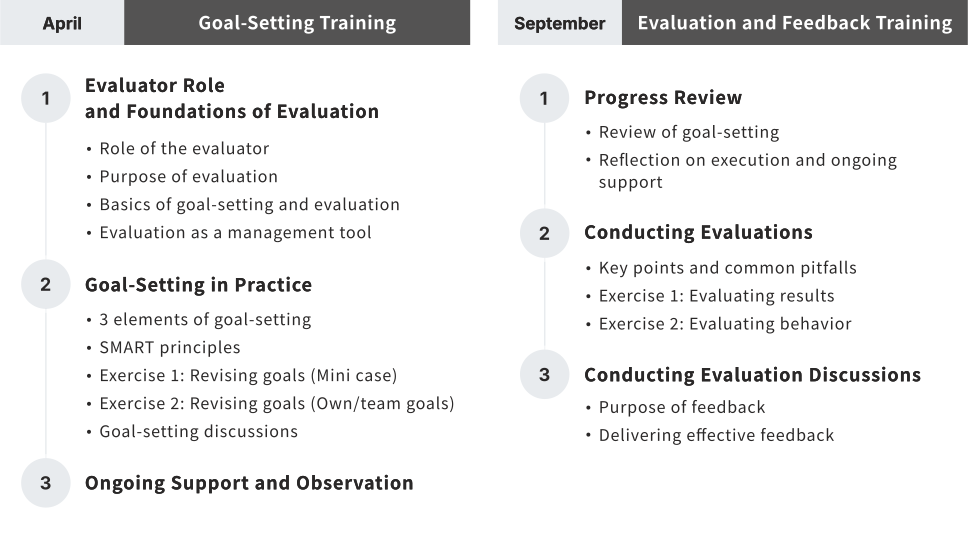
At Lead Create, evaluator training is designed around the evaluator’s role, practical evaluation skills, and day-to-day involvement with team members. Each program is adapted to the organization’s goals, evaluation system, and current challenges, with learning connected to actual evaluation timing, practice opportunities, and reflection after implementation.
1
Timing
2
Practice
3
Reflection
Supporting Internal Evaluator Capability
Many evaluators worry about whether they are setting goals, evaluating performance, and giving feedback effectively. At the same time, HR often sees limited change after training when evaluators return to daily work without support. Supporting goal-setting, evaluation, and feedback helps the evaluation system function more effectively and strengthens its impact on employee development and organizational results.
Goal Review Meetings
Evaluators review team member goals by department. Seeing how others set goals helps improve the goals submitted across the organization.
Evaluation Review Meetings
Evaluators review how goals, behaviors, and capabilities are evaluated. Clarifying the basis for evaluation makes feedback easier to provide and helps team members understand the results.
Feedback on Evaluation Practice
Evaluators receive feedback on goal-setting, evaluation, day-to-day support, and interview practices. Surveys and team member feedback help evaluators reflect and improve the next process.
Frequently Asked Questions
-
Q.
Can evaluator training be adapted to organization needs?
-
A.
Evaluator training should reflect the organization’s HR and evaluation system. Because goal-setting, evaluation standards, and feedback practices differ by organization, the program needs to be designed around how the system is used in practice.
-
Q.
Can the impact of evaluator training be measured?
-
A.
The impact becomes easier to measure when the expected outcome is specific. For example, organizations can track fewer HR revisions during goal-setting or stronger employee understanding of evaluation results. Broad goals such as improving evaluation skills should first be translated into concrete outcomes.
-
Q.
How should 1-on-1 meetings be combined with evaluator training?
-
A.
1-on-1 meetings are better positioned separately from goal management and evaluation. Goal management and evaluation focus on short-term results and behavior, while 1-on-1 meetings are more effective for longer-term development.
-
Q.
What kind of support does Lead Create provide for evaluation systems?
-
A.
Lead Create supports evaluation system reviews and broader redesign of core HR systems, including grading and compensation. Support begins with reviewing existing materials and clarifying issues before moving into detailed design.
-
Q.
How much time does it take to conduct evaluator training?
-
A.
Evaluator training takes two to three months of preparation before implementation. This period is used to understand the organization’s existing evaluation system and design a program that reflects how the system is used in practice.
