Selecting Management Candidates

Defining Selection Criteria and Evaluating Leadership Readiness

Challenges in Selecting Management Candidates

As organizations place greater focus on human capital as a driver of long-term growth, management selection has become a more strategic decision. The question is no longer who can fill an open role, but who is ready to lead teams, make decisions, and drive change in an evolving business environment. Many organizations continue to struggle because the management role itself is not clearly defined, making it difficult to translate expectations into consistent selection criteria.

Key
Issues

  • Capable employees are less interested in management roles
  • High performers do not always succeed after promotion
  • Strong management candidates are difficult to identify
  • Managers can maintain operations but struggle to lead change

Key Considerations in Selection

When selecting management candidates, it is easy to start with the method: interviews, reports, or assessment tools. The better starting point is the role: what managers are expected to do and what readiness should look like. Once these expectations are clear, assessment methods can be chosen to support the decision.

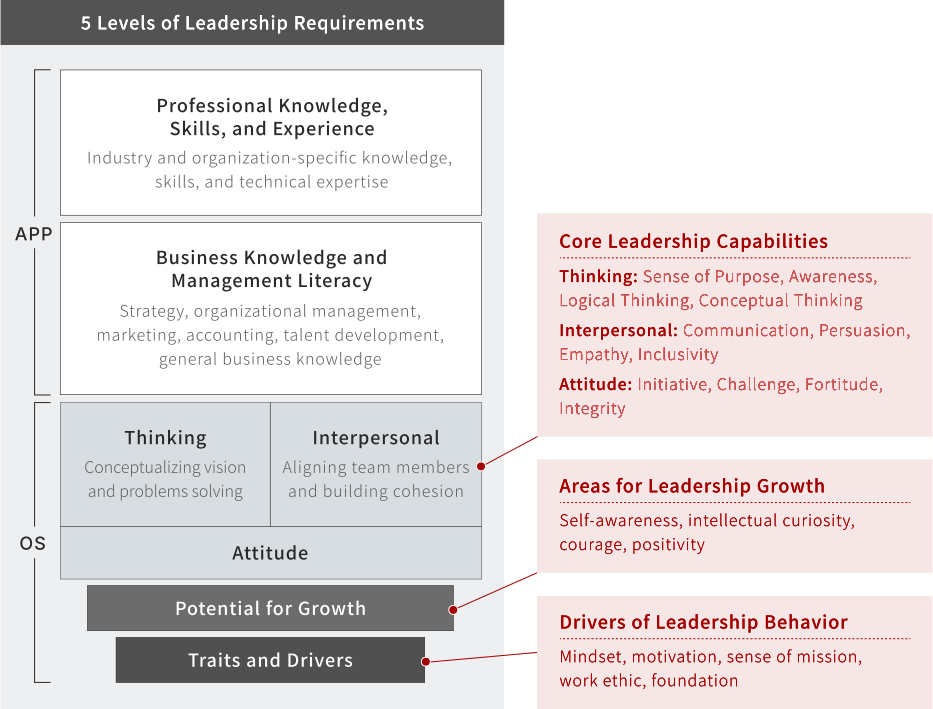
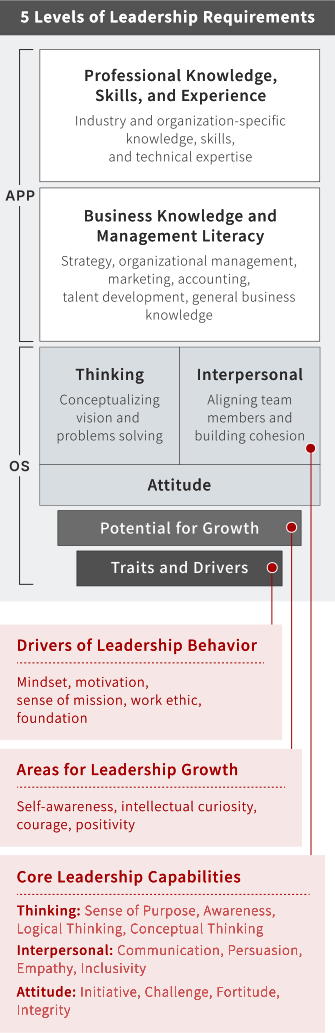
At Lead Create, we focus on Core Competencies, the foundational capabilities leaders use across roles and situations. Knowledge and expertise can continue to develop after promotion, but these deeper capabilities take time to build. Understanding whether they are already in place helps organizations select candidates with greater confidence.

management-selection-model

Choosing the Right Assessment Method

In promotion and selection decisions, the first step is defining what needs to be evaluated, then choosing assessment methods that support that purpose. Each method is designed to evaluate different areas with different levels of depth, which means no single approach is inherently better than another. What matters is understanding what each method can measure and choosing the approach that best fits the decision.

Method Overview
Self-Report
Assessments
Questionnaires Structured surveys to assess personality, IQ, EQ, and behavioral traits that are easy to administer at scale
Written
Responses
Written questions or reports to assess knowledge, depth of understanding, and individual perspectives
Interview
Assessments
Interviews Interviews to understand a candidate’s views, communication style, and overall character
Structured
Interviews
Behavioral interviews to explore past actions, results, processes, and expertise
Workplace
Assessments
Performance
Reviews
Supervisor evaluations based on workplace behavior, results, and day-to-day performance
360-Degree
Feedback
360-degree feedback to understand behavior through people familiar with the candidate’s work
Simulation
Assessments
Assessment
Center
Simulation-based assessments to identify potential and readiness for future roles
Role Play and
Case Studies
Role-specific simulations to assess expertise, technical skills, and practical performance
Method Traits Core Capabilities Expertise Work Experience
Attitude Thinking Interpersonal Knowledge Skills
Self-Report
Assessments
Questionnaires      
Written Responses        
Interview
Assessments
Interviews    
Structured Interviews      
Workplace
Assessments
Performance Reviews  
360-Degree Feedback      
Simulation
Assessments
Assessment Center      
Role Play and
Case Studies
     

Designing the Evaluation Process

In promotion and selection decisions, one assessment method is rarely enough. Most organizations need to evaluate several aspects of leadership, which means the process should combine methods that work together. The final design will depend on practical constraints, but it also sends a clear message about what the organization expects from its management candidates. A well-designed process improves the quality of selection decisions, helps candidates understand the results, and creates a stronger starting point for development.

1

Weighted Approach

This approach uses an overall score across multiple dimensions. It helps candidates and stakeholders understand how the evaluation was reached, and can be used for both selection decisions and identifying areas of development. Because the total score can be difficult to interpret, the process requires careful design and management.
  Performance
Reviews
Interviews Written
Responses
Assessments Overall
Weight 40% 20% 10% 30% 100%
Rating A B 70 80 -
Score 40 15 7 20 82

2

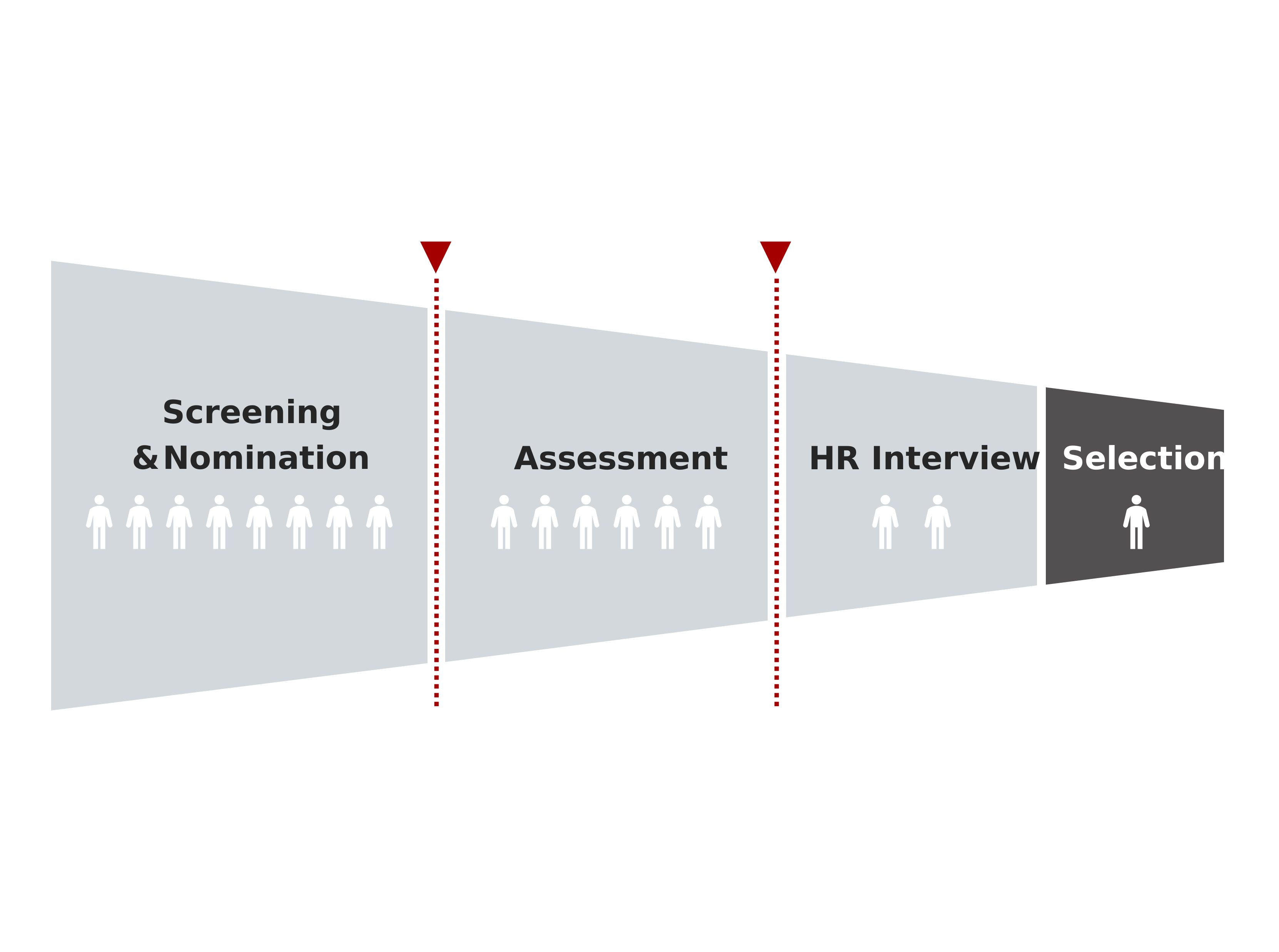
Screening Approach

This approach narrows candidates in stages, reducing HR workload and cost. It can make the process more efficient, but early screening may overlook candidates with less visible potential. To avoid this, nomination criteria should be separated from final selection criteria, helping reduce the risk of misalignment in promotion decisions.
management-selection-screening_en

3

Threshold Approach

This approach requires candidates to meet each defined criterion, making it useful for assessing overall readiness. It can also make organizational expectations clear, but the criteria need to be calibrated carefully. When thresholds are set too high, the process can become overly restrictive and weaken the overall talent pool.
  Performance
Reviews
Interviews Written
Responses
Assessments
Criteria B or higher
Past 3 years
7 or higher
10-point scale
7 or higher
10-point scale
Overall score of
80 or higher

4

9-Cell Approach

This approach maps candidates across two dimensions: performance and potential. Promotion decisions are made through discussion rather than by applying assessment results directly. Because judgment plays a large role, the process can vary by individual or department. To keep decisions consistent, performance and potential need to be clearly defined, along with how each should be measured.
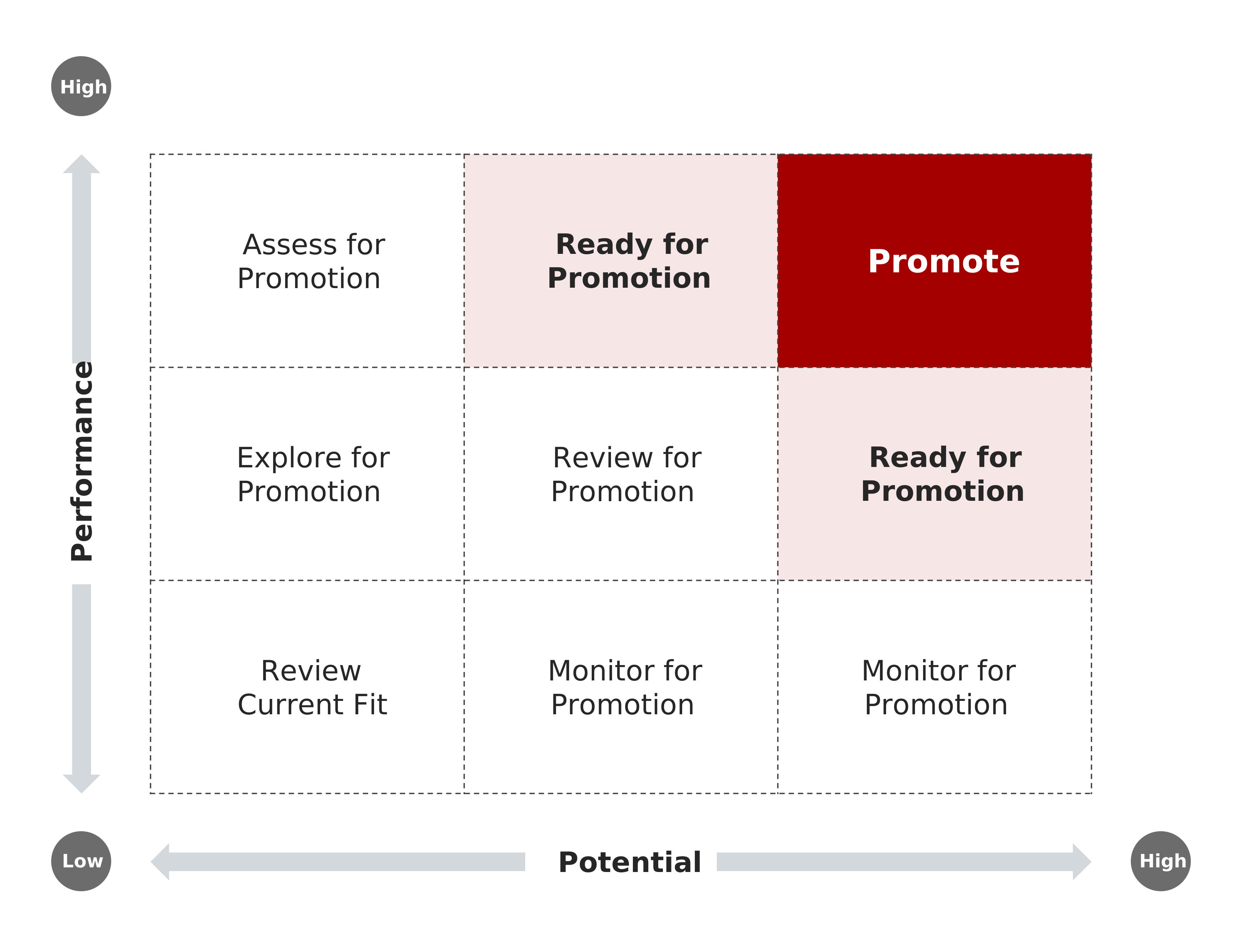
management-selection-9blocks_en

Applying Assessment Results

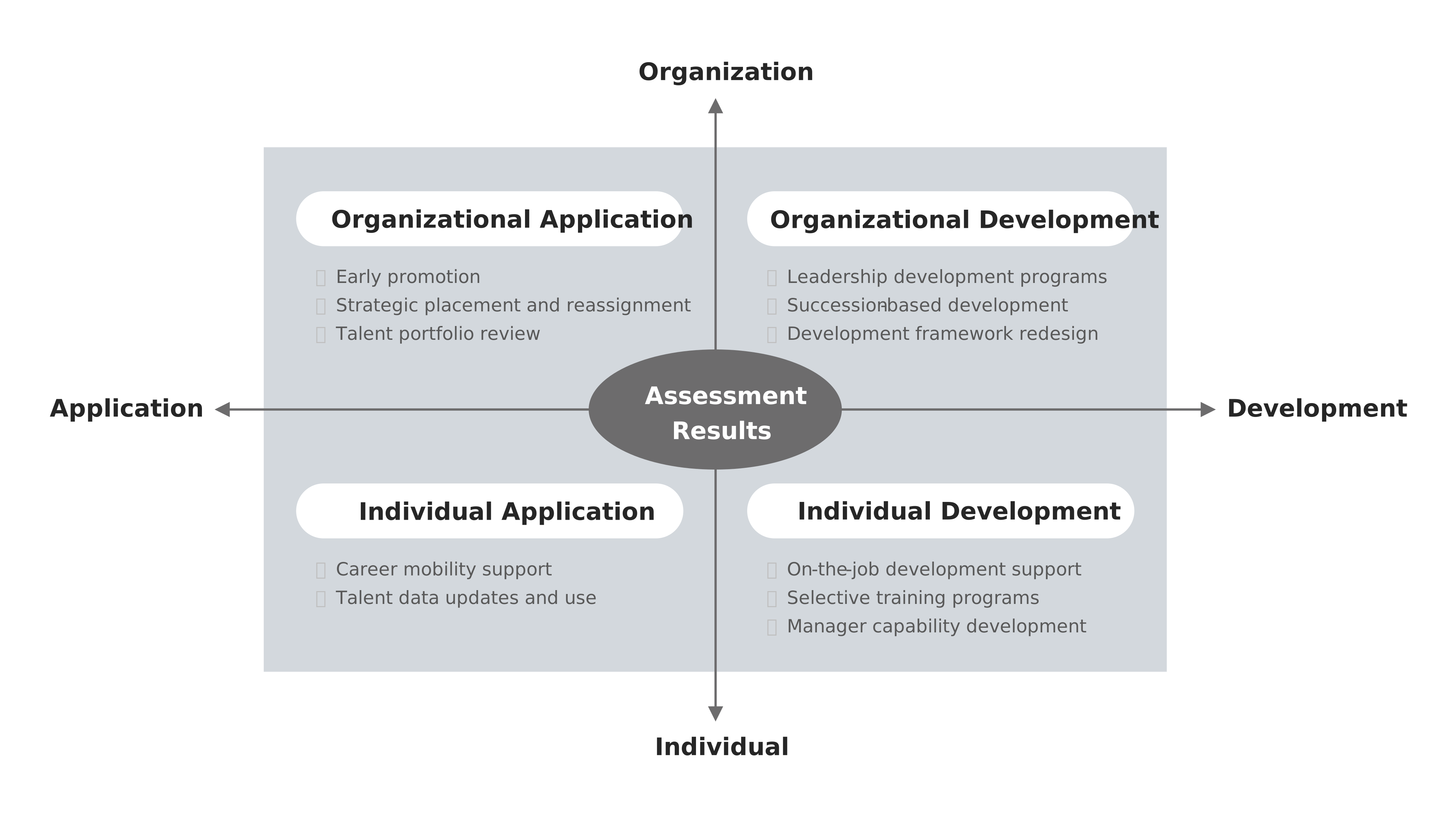
Collecting assessment data for promotion and selection requires meaningful investment. Limiting that data to a single decision reduces its value, especially when results stay within specific functions or stakeholders. Assessment results can support selection, development, hiring, career planning, and organizational design, allowing HR to turn important talent data into broader value for the organization.

management-selection-utilization_en

Frequently Asked Questions

Q.
Does strong individual performance indicate management readiness?
A.

Strong individual performance does not always mean management readiness. A clearer selection process starts by defining what the management role requires, then assessing candidates objectively against those requirements.

Q.
Is it possible to identify strong managers in advance?
A.

No selection process can guarantee success, but candidates who meet defined management requirements are more likely to succeed in the role.

Q.
Do organizations need external assessments for promotion decisions?
A.

Internal evaluation may be sufficient for past performance and observed behavior, while Core Competencies and broader leadership capabilities are often better assessed externally.

Q.
How can promotion assessment results be used for development?
A.

Assessment results are often underused after promotion decisions are made. The first step is clarifying which data can support development and how it can be applied to future initiatives.

Q.
How much time does it take to design a management promotion process?
A.

Designing the process takes three to six months when management requirements and leadership profiles need to be defined. When requirements are already clear, the process can be designed within two to three months.