
Developing Middle Managers
Developing middle managers together with senior leaders
Challenges in Developing Middle Managers
As the role and expectations of middle managers continue to evolve, developing them remains a common challenge across organizations. New approaches and terminology can be useful, but they do not replace the fundamentals of how managers grow. At Lead Create, we believe effective development depends on understanding those fundamentals and applying them consistently.
Key
Issues
- Training does not always translate into stronger performance
- Managers struggle to delegate and remain too involved in execution
- The candidate pool is limited, making earlier development difficult
- Development resources are available but support falls short
Middle Manager Development Essentials
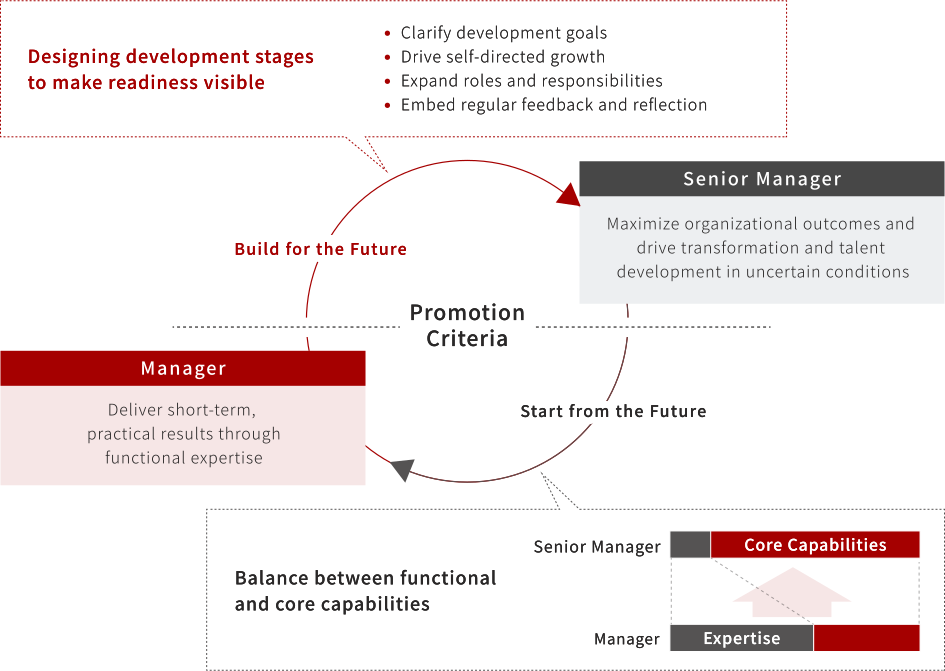
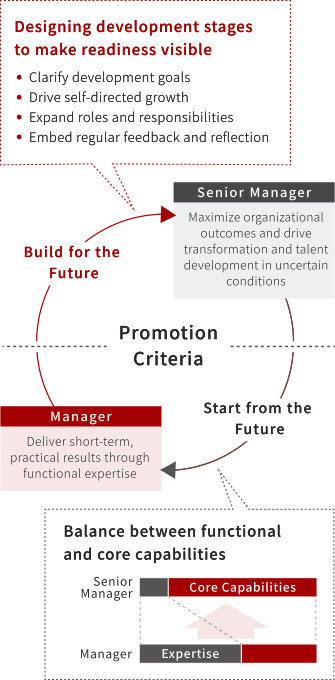
Effective development gives future managers enough time to understand the role and prepare for the shift it requires. In many organizations, these expectations are introduced only at promotion or during training, which leaves little time to build readiness before results are expected. At Lead Create, we refer to this as a delayed preparation approach. The early preparation approach starts sooner, giving future managers time to build the capabilities needed to shift from producing results through their own work to producing results through management and leadership.
Role and Limits of Training
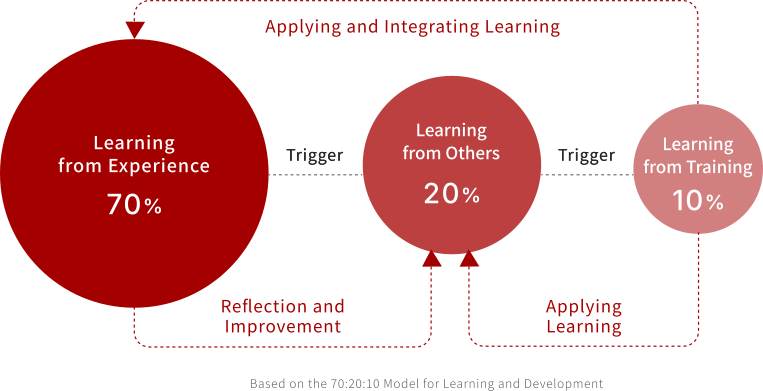
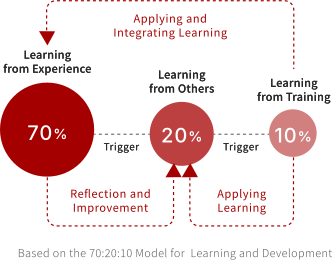
The 70:20:10 model in leadership and management development shows that growth comes through experience, learning from others, and training. Each plays an important role, with direct experience having the greatest impact. Training should serve as the starting point by helping managers understand what they need to learn, how to apply it in daily work, and which challenges will support their growth.
Experiential Learning and 1-on-1 Support
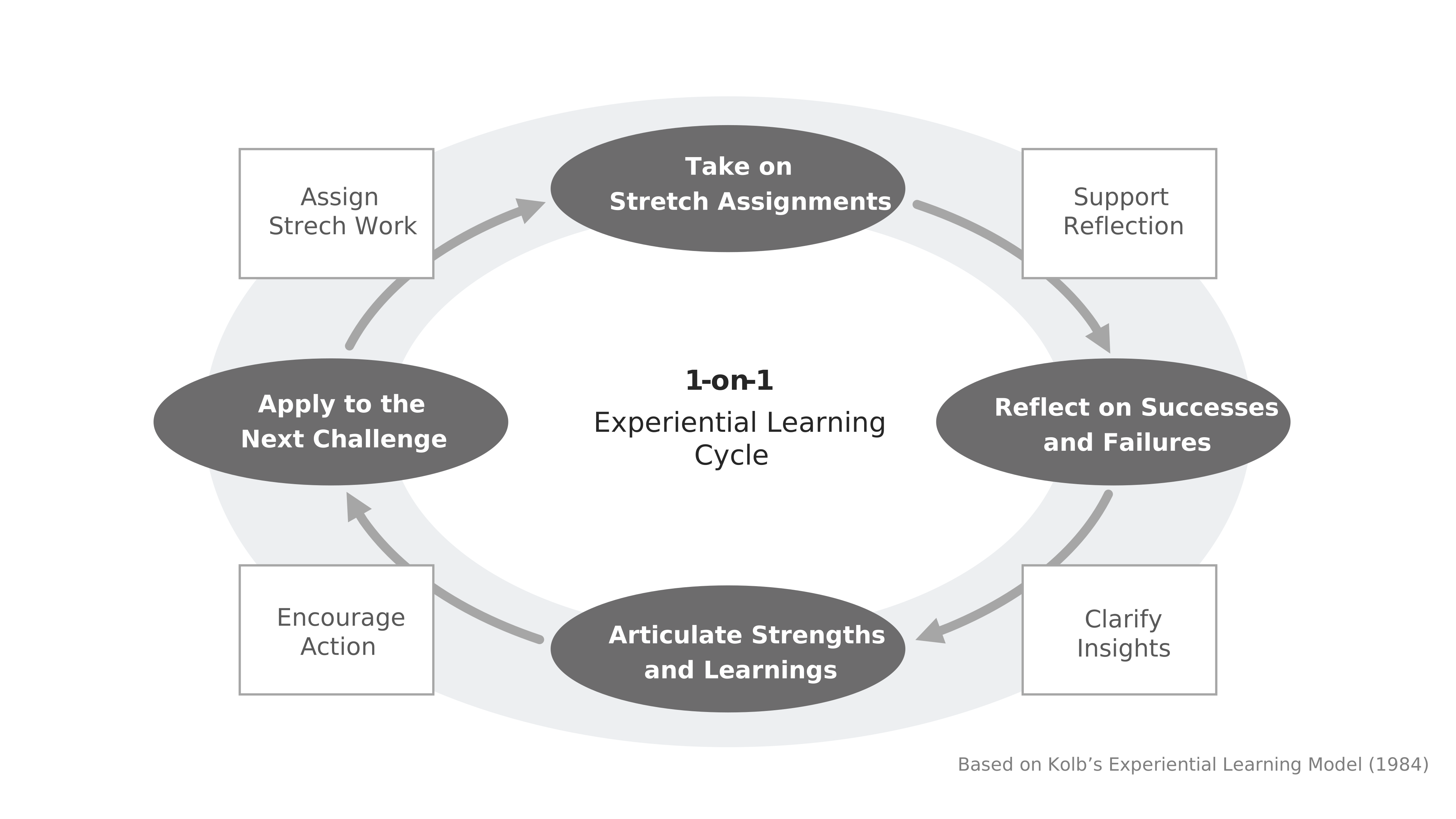
When developing middle managers through the early preparation approach and the 70:20:10 model, supervisors play an essential role. They provide the experiences future managers need to grow and support that learning through feedback and advice. Because nearly 90% of middle manager development depends on experience and learning from others, supervisors need to understand what kinds of challenges help managers grow.
Unfamiliar work
Creating change
Greater responsibility
Broader influence
Diverse stakeholders
After providing these experiences, supervisors need to stay involved so the experience leads to growth. Many supervisors can give practical guidance on work but are less familiar with how to draw out the learning needed for middle manager development. This makes it important for supervisors to understand experiential learning and use 1-on-1 meetings for feedback, coaching, and reflection.
Designing Development Programs
Below is an example of a development program built around the 70:20:10 model, experiential learning, and supervisor support. The program gives future middle managers a preparation period before promotion and helps current middle managers continue building the capabilities required for growth.
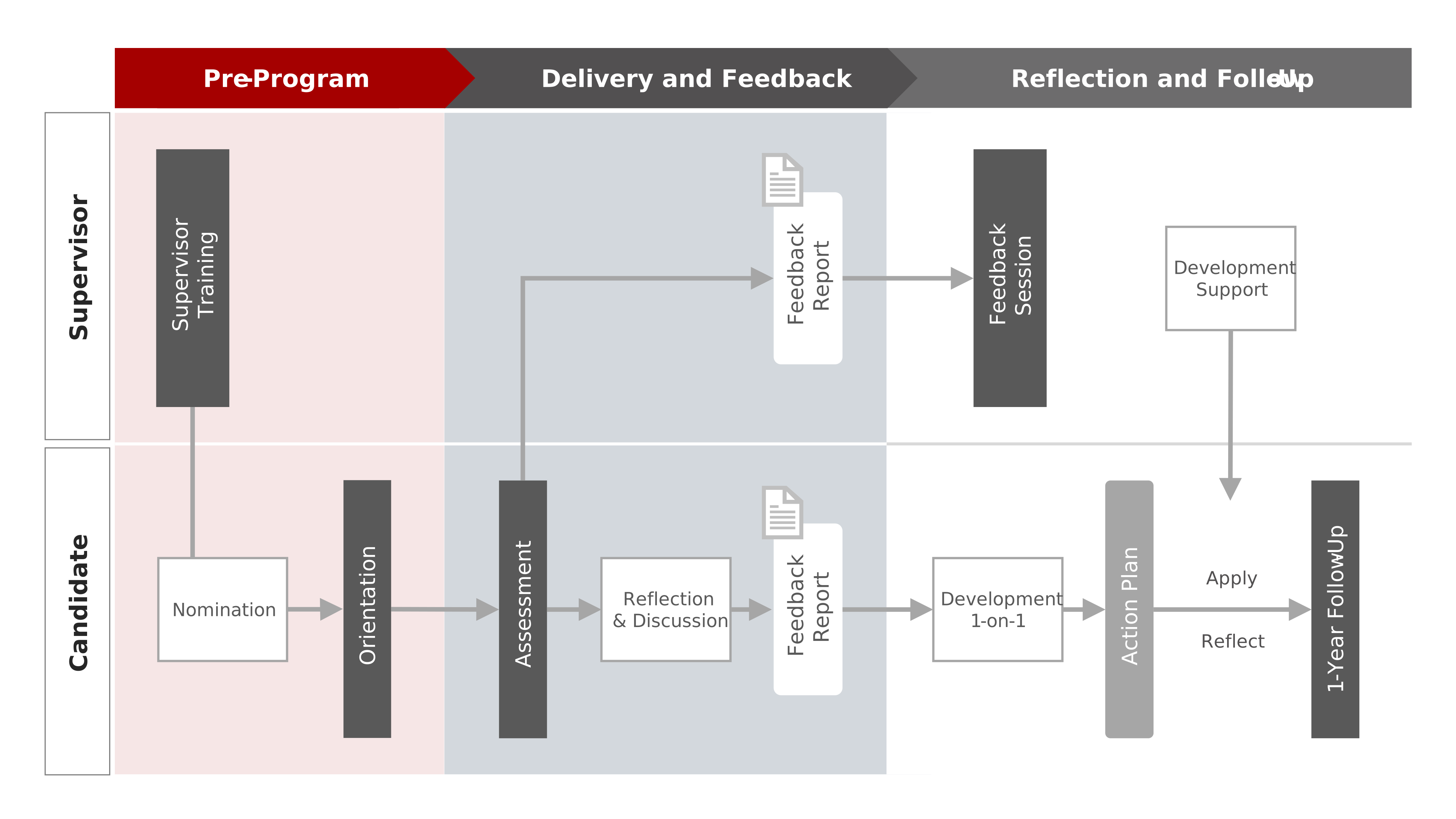
Supervisor Training
Orientation
Assessment
Feedback Session
1-Year Follow-Up
Frequently Asked Questions
-
Q.
How much time does it take to develop middle managers?
-
A.
Development depends on the gap between current capability and future vision. Core capabilities may take one to two years to develop, while building the required knowledge may take six months to one year.
-
Q.
Is training necessary under the 70:20:10 model?
-
A.
Training serves as the starting point for making experience and learning from others more effective. It helps participants understand what they need to learn and how to apply that learning in daily work.
-
Q.
What should be done when challenging assignment opportunities are limited?
-
A.
Challenging assignments do not need to be large projects. Cross-functional work, new initiatives, and projects involving external stakeholders can be effective. Work that requires higher standards or unfamiliar responsibilities can also create meaningful learning opportunities.
-
Q.
How can organizations build understanding for supervisor training?
-
A.
Supervisor training is easier to communicate when development is separated into work guidance and successor development. Many organizations provide work guidance, but leadership development is often less structured. Showing how this affects future development can help build understanding.
-
Q.
Do development programs need to begin with training?
-
A.
Development can begin with assessment training, 360-degree feedback, or a similar opportunity to understand strengths and areas for development. What matters is creating a clear starting point for participants to understand their current reality and use it for growth.
